
Using surplus as a
solution to scarcity.
Millions of families across the United States go without the fresh food they need, while billions of pounds go to waste. Sharing Excess is creating a national food redistribution system capable of closing the meal gap and protecting the Earth's most valuable resources.
Today, we feed over a million New Yorkers, but we're just getting started. The need for food access has never been higher across the five boroughs.
Hunger and food waste
are symptoms of the
same problem.
The food already exists. What's missing is the infrastructure to redistribute it.
140B+
pounds of food go to waste in the United States every year.
ReFED, USDA
47M
Americans experience food insecurity each year.
USDA, 2024

~10%
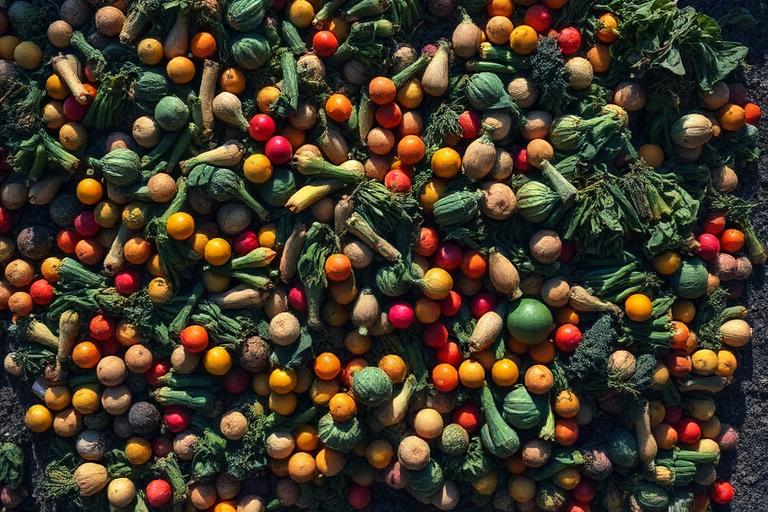
of global greenhouse gas emissions come from food that is never eaten.
FAO, Project Drawdown
#3
If food waste were a country, it would be the third largest emitter on Earth, behind only the US and China.
UN Environment Programme

24%
of all freshwater used in agriculture goes to food that is ultimately wasted.
World Resources Institute
Where The Waste Happens
Billions of pounds of food is lost before it reaches American homes.
Billions of pounds of fresh food never make it to consumers. The vast majority is lost early in the supply chain, at the farms, wholesalers and importers, and grocers that feed the country.

Farms
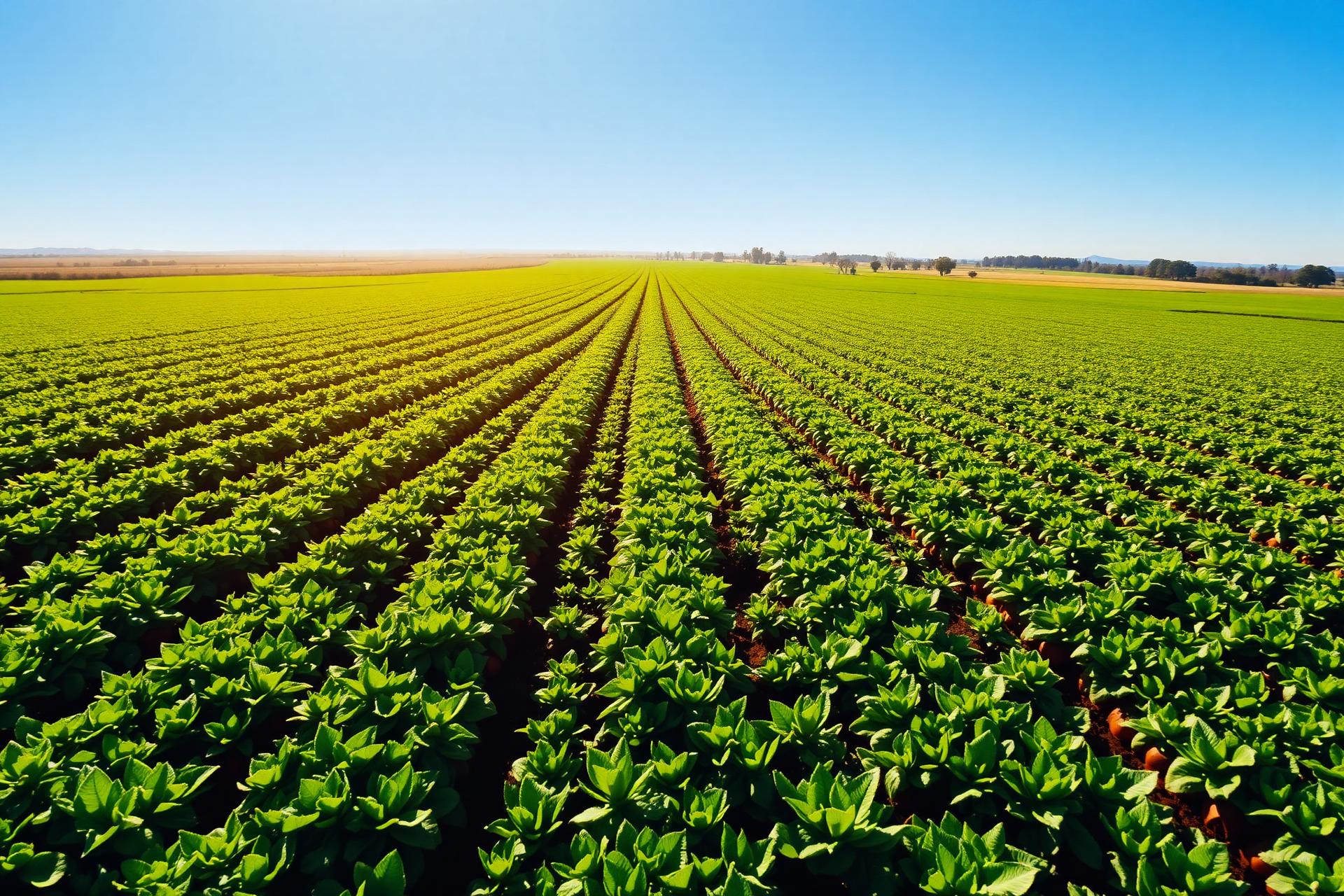
Billions of pounds of perfectly edible produce are left unharvested or plowed under each season due to cosmetic standards, labor shortages, and shifting buyer demand.

Wholesalers & Importers
At distribution hubs and ports, surplus pallets pile up when orders fall through, shipments arrive early, or product nears its sell-by window faster than it can move.

Grocers
Retailers overstock to keep shelves full, leaving mountains of fresh food to be discarded long before it ever reaches a household.
Introducing
Sharing Excess
We rescue surplus food early in the supply chain.
Sharing Excess is a national food rescue nonprofit closing the gap between farms with too much fresh food and communities with too little. We work directly with growers, wholesalers, and food banks to build the missing logistics layer that keeps edible food from going to waste.

1. We operate inside the food system.
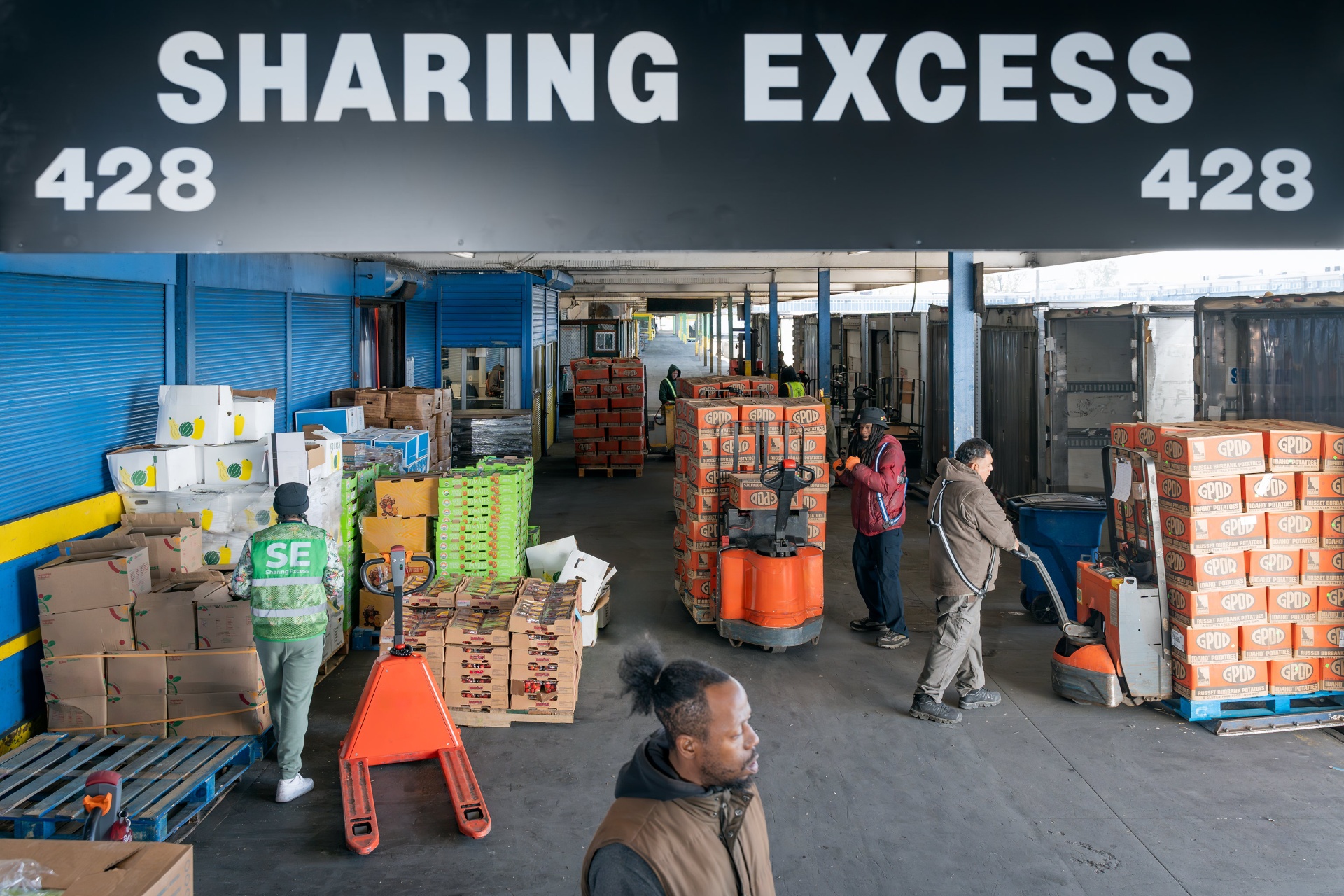
Our team works on the ground at farms and wholesale produce markets, where surplus first appears. We catch food at the source, before it's written off as waste.

2. We handle the logistics.
Trucks, cold storage, and routing technology. We move fresh produce across the country at the scale and speed surplus demands, getting it to the communities that need it most.

3. We deliver to thousands of orgs.
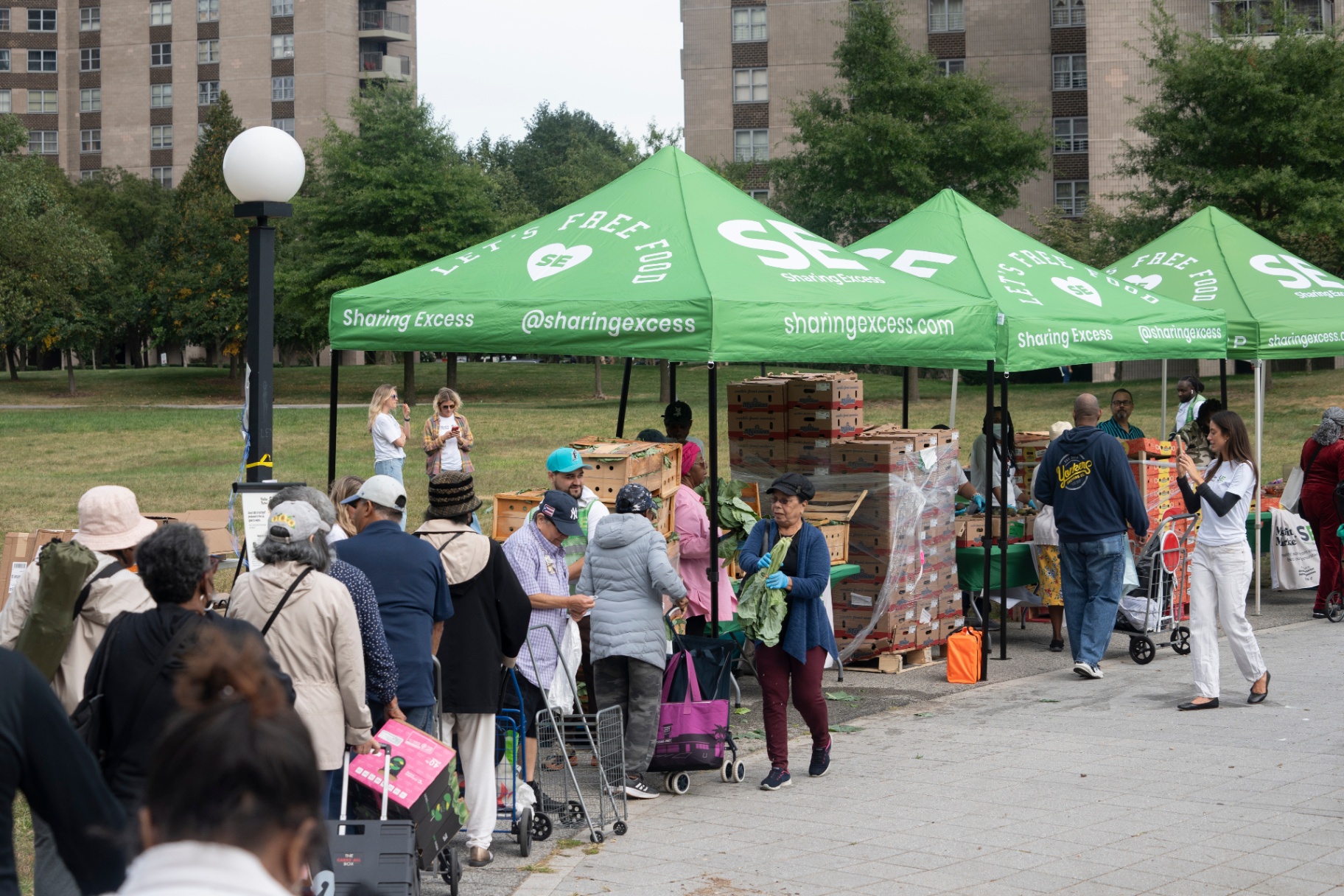
Food banks, pantries, churches, and community pop-ups across the country. Our partner network is how rescued food reaches families fast, fresh, and free.
From our Hunts Point Produce Market hub
Our Impact to Date
A snapshot of Sharing Excess in New York City, 2023 to 2026. Real food, real meals, real people, and real emissions kept out of the atmosphere.
30.2M
pounds of food redistributed
25M
meals made possible
$58M
of fair market value
110M
pounds of upstream emissions diverted
224+
distribution partners
1M+
New Yorkers fed annually
Reaching all five boroughs with fresh produce.
The need for food donations in New York City is immense, and the demand on recovery organizations has only grown with the recent surge of migrants and families turning to community food programs. Sharing Excess shows up. They move real volume, they don’t cherry-pick the easy lots, and they aren’t afraid to do the work - sorting, repacking, and rescuing product that other partners pass over.
Joshua Gatcke
Vice President · Fruit Procurement & Sales · Nathel & Nathel, Inc.
1 in 5
NYC adults experienced food insecurity in the last year
1 in 4
NYC children live in food-insecure households
+85%
increase in food pantry visits since 2019
20
NYC community partners on our waitlist today
Sources: NYC Mayor's Office of Food Policy · Food Bank For NYC · City Harvest
ON THE GROUND · RIGHT NOW
The federal floor is dropping out. The line at the door keeps growing.
Since H.R. 1 — the One Big Beautiful Bill Act — took effect, SNAP has been quietly contracting. Expanded work requirements began phasing in on March 1, 2026, fuel and food prices have spiked since the Iran conflict, and our partner pantries are absorbing the hit. This is what we’re seeing on the Hunts Point floor and across the five boroughs week by week.
223K
New Yorkers at risk of losing SNAP under the new federal work requirements that took effect this spring.
NYC Mayor's Office, June 2026
180K+
New Yorkers statewide have dropped off SNAP rolls since January 2025 — a 6.2% decline tied to the federal overhaul, not improving conditions.
City Limits, May 2026
+54%
Increase in fuel costs for NY food bank fleets since 2025. Every dollar burned at the pump is a dollar pulled from rescue and distribution.
Regional Food Bank of Northeastern NY
20
Community organizations sitting on our NYC waitlist today — pantries telling us their shelves empty faster than they can restock.
Sharing Excess NYC ops, 2026
Click to see more
Expanded SNAP work requirements under H.R. 1 began phasing in March 1. Recipients are getting cut off mid-month, missing recertification deadlines, or self-deselecting because the paperwork burden has gotten too heavy. The dollars that used to buy a week of groceries are now buying three or four days.
Diesel costs have climbed sharply since the Iran conflict, raising the price of every pallet moved and every grocery run a family makes. Hourly workers are absorbing higher commutes and higher checkout totals at the same time — and showing up at pantries that used to only see weekend visitors.
Our partners report longer lines, earlier closures, and a steady arrival of first-time visitors — full-time workers, seniors on fixed incomes, families with kids — people who were managing six months ago and aren't now. Twenty organizations are already on our waitlist asking for regular pickups we can't yet serve.
WHAT THIS MEANS FOR US
Every dollar pulled from SNAP, every cent added to diesel, and every new family in the pantry line lands directly on our dock at Hunts Point.
Rescued produce is one of the fastest, highest-leverage ways to backfill what the federal safety net is taking off the table. Growing our logistical capacity right now isn’t optional — it’s the difference between a partner getting a full pallet next week or turning families away. The breakdown below is exactly what it takes to meet this moment.
Sources: NYC Mayor's Office of Food Policy · NYC Food Policy Center (Hunter College) · City Limits · Regional Food Bank of Northeastern NY · Gothamist · NYHealth Foundation testimony to NYC Council Committee on General Welfare (April 2026).
NYC FUNDING PARTNERS
Building a coalition of funders behind fresh food access in New York City.
We've built a growing base of philanthropic support behind the New York operation and unlocked state funding to build more durable, diversified revenue paths. We continue to prioritize efforts that sustain growth through a mix of public, philanthropic, and earned revenue.


Our Nationwide Footprint
Focused in New York City, active across the country.
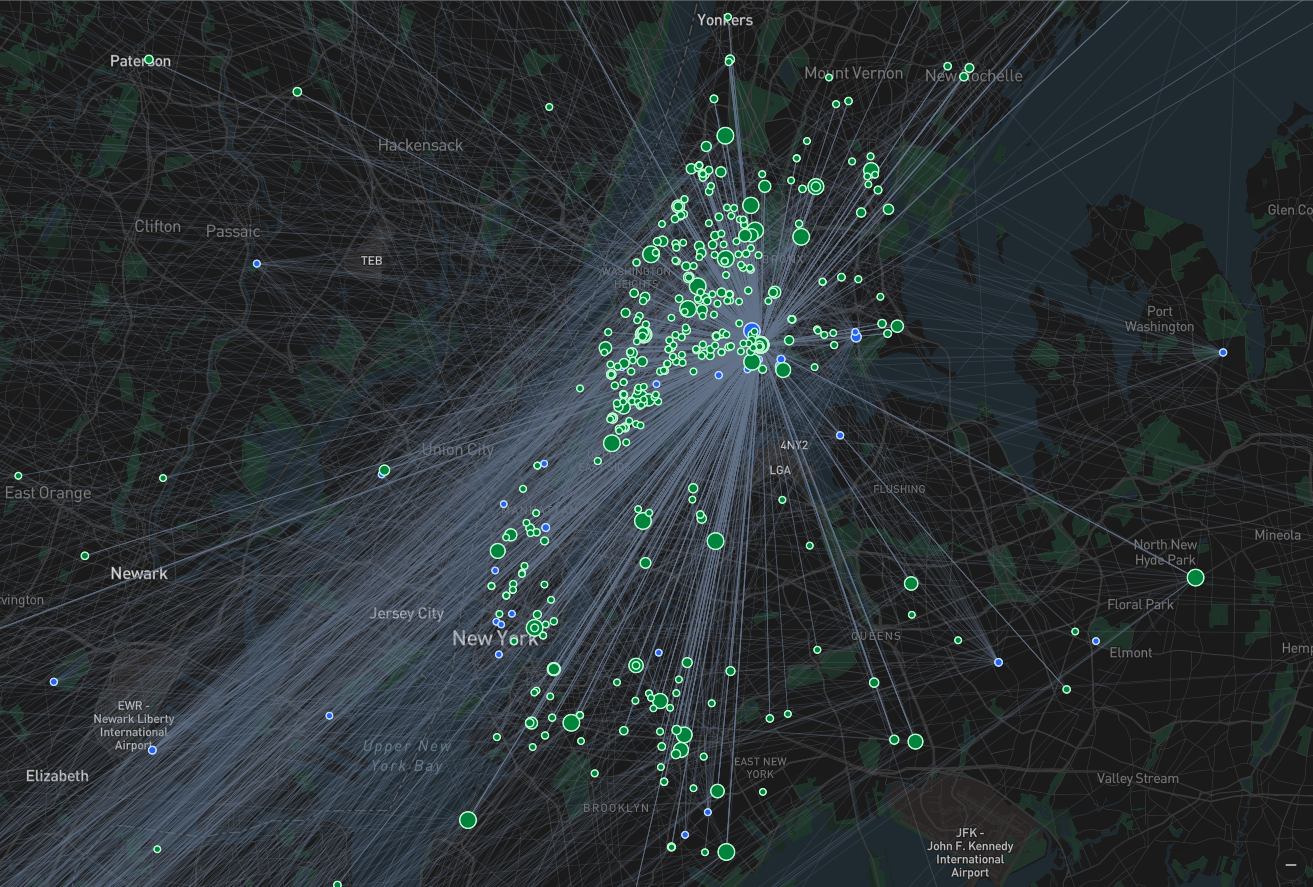
While our largest daily operation is inside Hunts Point, our reach extends far beyond the five boroughs. To date, Sharing Excess has moved over 273 million pounds of fresh food into communities across the United States.
Loading live rescue locations.
Our Vision
Close the produce gap in America.
Over half of the meal gap in America is fresh produce. It's the most perishable, the hardest to rescue at scale, and the most nutrient dense food you can put on a family's table. Sharing Excess is building the national infrastructure to move billions of pounds of surplus produce from farms and wholesalers into the communities that need it most.
Featured In
Technology
Everything Integrated on One Platform
We have built one of the best operational technologies for running food rescue at scale. Our platform provides full data tracking and visibility on every rescue, the climate impact it creates, and how much money our food business partners are saving.
Thank You
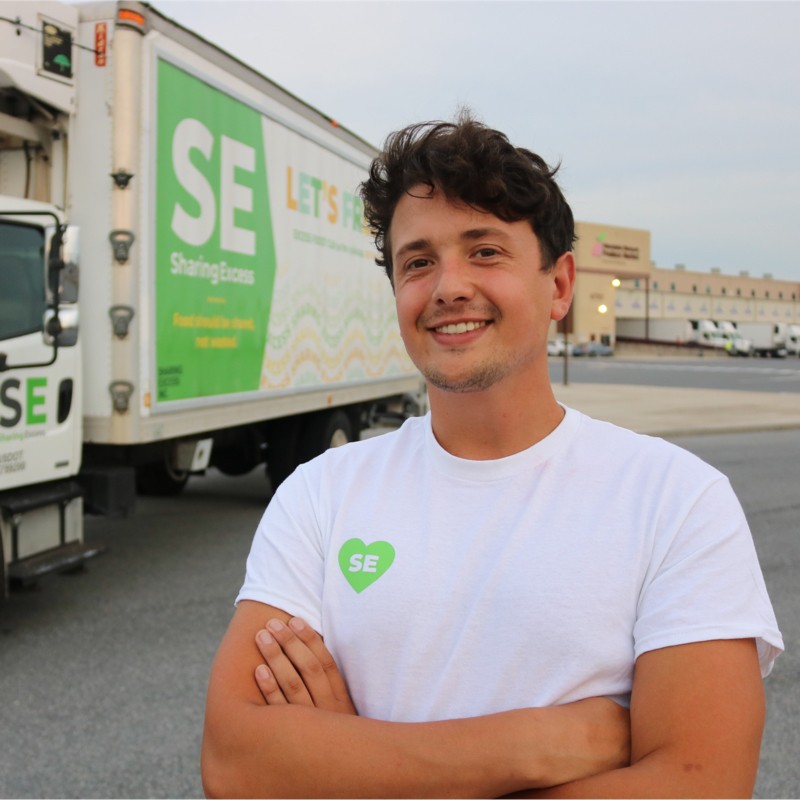
Thank you for taking the time to learn about our work in New York City. None of it is possible without the generous, compassionate people we partner with every day. We're inspired by the donors we meet, the communities we serve, and the farmers, wholesalers, and organizations who make food rescue possible at this scale.
The need in the five boroughs has never been higher, and we have the capacity to do so much more here. I would love to sit down with you one on one to understand how we can partner to create a New York City without food insecurity.
Sharing Excess
501(c)(3) Nonprofit | EIN 86-2161466
Mail checks to: Sharing Excess
6700 Essington Ave, Suite E-207
Philadelphia, PA 19153
Verified & Top Rated
Learn More About Our Work
Stories, features, and moments that shaped Sharing Excess.
Click the arrows to browse more stories.


Keep up with us on Instagram
Stay up to date with everything we're doing to fight food waste in our community, as well as yours.
Recent posts
Sharing Excess Inc. is a registered 501(c)(3) nonprofit. Tax ID/EIN: 86-2161466. sharingexcess.com